During the event, you’ll find thousands of unique pieces from a wide variety of styles and eras, including:
Georgian (years 1714–1837): Characterized by hand-cut stones, yellow gold, and gemstones set in silver, often featuring nature motifs.
Victorian (years 1837–1901): Named for Queen Victoria, it features romantic, sentimental designs, lockets, cameos, and, later, mourning jewelry in tribute to Prince Albert, the love of her life
.
Art Nouveau (years 1890–1910): Focuses on flowing, organic curves, enamel work, and nature-inspired, artistic forms.
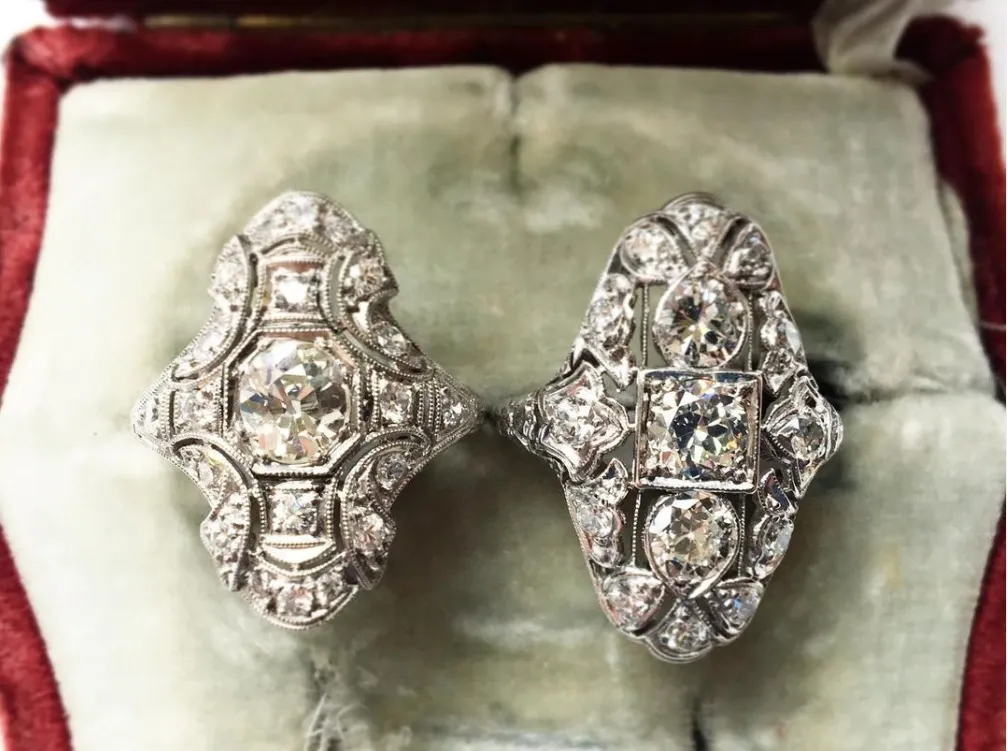
Edwardian (years 1901–1915): Known for delicate, feminine styles using platinum and diamonds, often featuring lace-like filigree.
Art Deco (years 1920–1945): Defined by bold geometric patterns, symmetrical lines, and contrasting colors. Often using hand engraving and accents such as sapphires, emeralds and rubies
Retro (years 1935–1950): Features large, bold, angular and colorful designs in yellow and rose gold, driven by WWII limitations on platinum.
Mid-Century (years 1950–1970): Showcases versatile, modern, and often playful designs with a shift toward daily wearability.
Modern (1970s–Present): Reflects contemporary, diverse styles, including minimalist and bold, artistic, or avant-garde pieces.